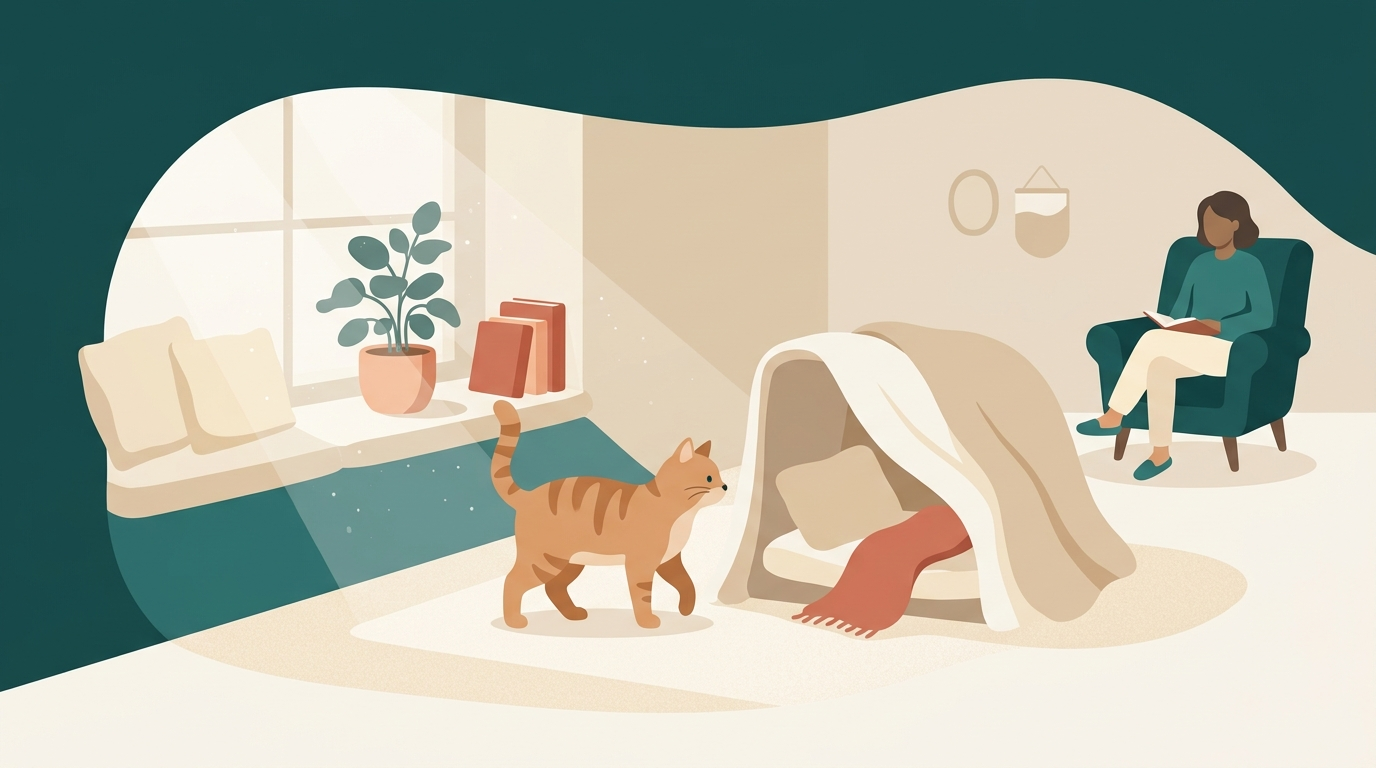
A change in hiding, appetite, grooming, litter-box use, activity, or social behaviour can be a useful clue—but “stress” is not a diagnosis. Start by recording what changed and contact your veterinarian for a new, persistent, or worrying behaviour or health change. Once medical causes have been considered, a calmer home usually means more predictable routines, easier access to resources, and more choice—not forcing interaction or buying a quick fix.
At Catpip, Pico’s journey taught us to look for the change before the accident and to resist guessing at an emotion from one behaviour. That distinction matters: a quiet cat may be resting; a hiding cat may be unwell; a litter-box change can have medical, environmental, and social contributors at once.
Urgent: contact a veterinarian now
Seek urgent veterinary help if your cat is repeatedly straining to urinate, producing little or no urine, crying out, showing blood in urine, vomiting, becoming weak or collapsed, seems in severe pain, or has breathing difficulty. A blocked urinary tract can be life-threatening. Do not wait for a calming product, a home reset, or a new litter to work. If you are unsure, call your local veterinary service and describe exactly what you are seeing. AAHA
What subtle signs might be worth recording?
The same sign can have more than one explanation. PetMD’s veterinarian-reviewed overview lists changes such as hiding, altered appetite, excessive grooming, changes in vocalization, and litter-box changes as possible signs of stress; it also advises veterinary input because medical problems can look similar. PetMD: Signs your cat is stressed
| What you notice | What to record before interpreting it | Vet-first boundary |
|---|---|---|
| More hiding or avoiding rooms/people | When it began, which rooms, whether your cat still eats, drinks, uses the box, and can move freely | Sudden hiding with illness signs, pain, appetite change, or reduced drinking needs veterinary advice |
| Changed appetite, drinking, sleep, or activity | What changed from your cat’s normal, timing, amount if known, and any vomiting or weakness | Appetite, drinking, energy, or gastrointestinal changes can be medical; call your veterinarian rather than calling it stress |
| More grooming or a changed coat | Body area, frequency if observed, skin changes, and any new household event | Skin, pain, parasite, or other health issues need veterinary assessment |
| More vocalising, startle, or vigilance | Trigger, time, location, nearby people/animals, and whether the cat can move away | A new behaviour change deserves a veterinary conversation, especially with other health changes |
| Litter-box avoidance, accidents, or spraying-pattern deposits | Posture, surface, amount, box access, and urinary signs | Sudden or persistent elimination change needs veterinary advice; straining, little/no urine, blood, or pain is urgent |
| Tension with another cat | Staring, blocking, chasing, route changes, resource locations, and whether either cat can leave | Conflict can be relevant, but pain and illness still need consideration |
Plain-text summary: record the exact change, when it started, what happened around it, and any health signs. Hiding, grooming, appetite changes, vocalising, litter-box changes, and conflict may be context clues; none proves stress on its own.
What can trigger a stress response in a cat?
Triggers are context, not proof. AAHA notes that changes in the home, conflict between cats, litter-box setup, illness, and stress can all be relevant when a cat stops using the box. Its life-stage guidance also emphasizes that punishment scares cats and can damage the human–animal bond. AAHA/AAFP guidance
Common things to put in your timeline include:
- a move, renovation, visitors, new baby, schedule change, or unfamiliar smell;
- a new pet, tension with a housemate cat, or an outdoor cat visible at a window;
- a closed door, noisy appliance, changed furniture layout, or a route that now feels narrow;
- changes to food, litter, box style, cleaner, resource locations, or daily play;
- pain, sickness, mobility changes, or a return from a veterinary visit.
The useful question is not “which one caused it?” It is “what changed, and what does my cat still have easy, safe access to?” For a structured home assessment around toileting, see My cat is peeing everywhere: a vet-first decision tree.
How can you make home calmer without forcing your cat?
After veterinary advice, make the next step small and reversible. Aim for predictable access and choice, not a dramatic makeover.
- Keep the day predictable. Feed, play, and quiet time on a steady rhythm where practical. Do not force play, cuddling, or visitors on a cat who is moving away.
- Give resources separate routes. Place litter boxes, water, food, resting places, scratching surfaces, and hiding/high spaces so a cat is less likely to be trapped or watched at one bottleneck.
- Protect a quiet retreat. Let your cat choose a calm resting space. Do not pull them out of a hiding place unless safety requires it.
- Reduce a specific pressure when you can identify one. For example, manage visual access to a repeatedly appearing outdoor cat, or keep a renovation room closed while preserving access to essentials.
- Use short, low-pressure enrichment. Offer a familiar toy or food activity only if your cat is interested. Stop if it adds frustration or avoidance.
- Change one thing at a time. Record the date, what changed, and what you saw. This avoids turning a home reset into another unpredictable event.
Do not punish, yell, spray water, or withhold resources. AAHA/AAFP guidance says these responses can scare a cat and impair the relationship. AAHA/AAFP guidance
When should you call the vet instead of trying a calmer-home reset?
Call your veterinarian promptly for a new or persistent change in behaviour, eating, drinking, grooming, mobility, or litter-box use—even if you can identify a stressful event. A stressor and a medical issue can coexist, and behaviour is not a home diagnosis.
Seek emergency care for the urgent signs above. In particular, do not use “stress” to explain away straining, very little/no urine, blood in urine, severe pain, vomiting, weakness, collapse, or breathing difficulty. The AAFP/ISFM house-soiling guideline recommends history, physical examination, and testing as indicated because contributors can overlap.
For a factual urine-pattern log, use Is it spraying or peeing? The photo-free clues to record for your vet. If an accident is on bedding, Cat peeing on the bed: the first 24 hours and mistakes to avoid keeps cleaning separate from the health question.
Where does Catpip fit—and where does it not?
Catpip is building practical tools and comparisons for calmer cat homes. That can mean helping you compare a litter change, a box layout, or a pheromone format with realistic expectations. It does not mean a product can tell you why your cat changed, replace a veterinary assessment, or guarantee a calmer cat.
If a veterinarian agrees that a product trial belongs in the plan, first make the home basics easier: accessible litter boxes, separate routes, stable routines, and a record. Then read Cat pheromone diffusers: what they can support and what they cannot replace for a label-led, non-promissory comparison. For box decisions, use Covered vs open litter boxes: evidence plus a fair home trial.
Pico’s log: notice the change before naming the feeling
Pico’s long house-soiling journey involved changes to litter-box setup, litter, pheromone context, and routine over time. We learned that “stressed” was too broad to be a useful conclusion. What helped us was recording the room, route, timing, and changes around an event instead of trying to read Pico’s mind.
What we do not know from the source record is a complete trigger-by-trigger timeline or a single cause for every incident. We will not turn Pico’s story into a diagnosis or product endorsement. For the documented one-variable method, read Pico’s seven-day litter-box reset.
Pico’s experience is a single household story, not veterinary advice or a guarantee for another cat.
What should you do next?
Write down one observable change and one possible household change today. Contact your veterinarian for a new or ongoing behaviour or health change. After that conversation, protect a quiet route to essentials and make only one low-pressure home adjustment at a time. This gives your cat more predictability and gives you better facts for follow-up.
Frequently asked questions
How do I know if my cat is stressed?
You cannot confirm stress from one sign at home. Hiding, appetite changes, grooming changes, vocalising, litter-box changes, and tension with other cats can be clues to record, but medical problems can look similar. Contact your veterinarian for a new, persistent, or worrying change.
Can stress make a cat stop using the litter box?
Household change and conflict can be relevant, but litter-box avoidance can also involve illness, access, setup, cleaning, and other factors. A sudden or persistent change needs veterinary advice; urinary red flags need urgent care. AAHA
My cat is hiding and not eating. Should I wait for them to calm down?
No. Hiding and reduced eating can have many causes, including illness or pain. Contact your veterinarian promptly for advice instead of assuming stress is the explanation.
Can I calm an anxious cat with a pheromone diffuser?
A pheromone product may be worth discussing as one environmental support after veterinary assessment, but it cannot replace urgent care, a medical work-up, accessible resources, or a broader home plan. Individual response varies. Cat pheromone diffusers: what they can support and what they cannot replace
Should I comfort a hiding cat by bringing them out?
Usually, give a cat a quiet, safe choice to come out rather than pulling them from a retreat. Keep essential resources accessible and seek veterinary advice for a new or concerning change, especially if eating, drinking, toileting, mobility, or breathing also changes.
Sources and publication note
- AAHA: Why isn’t my cat using the litter box? — veterinary assessment, overlapping contributors, and urgent boundary.
- AAHA/AAFP Feline Life Stage Guidelines: behavior and environmental needs — home context, litter-box contributors, and no-punishment guidance.
- AAFP/ISFM Guidelines for Diagnosing and Solving House-Soiling Behavior in Cats — systematic assessment and overlapping contributors.
- PetMD: 8 signs your cat is stressed — veterinarian-reviewed signs overview; used as a secondary source, not a diagnosis tool.
Not veterinary advice: This article provides general educational information and describes one household’s experience. It does not diagnose, treat, or replace advice from a licensed veterinarian. If your cat’s behaviour or health changes, contact your veterinarian; seek urgent care for emergency signs. Product information is not a recommendation for every cat, and your veterinarian should advise on medicines, supplements, and medical conditions. Pico’s experience is not evidence that the same approach will work for another cat.
Next step: Start Pico’s one-variable reset with a veterinary conversation, then use it to record one calm home adjustment at a time.