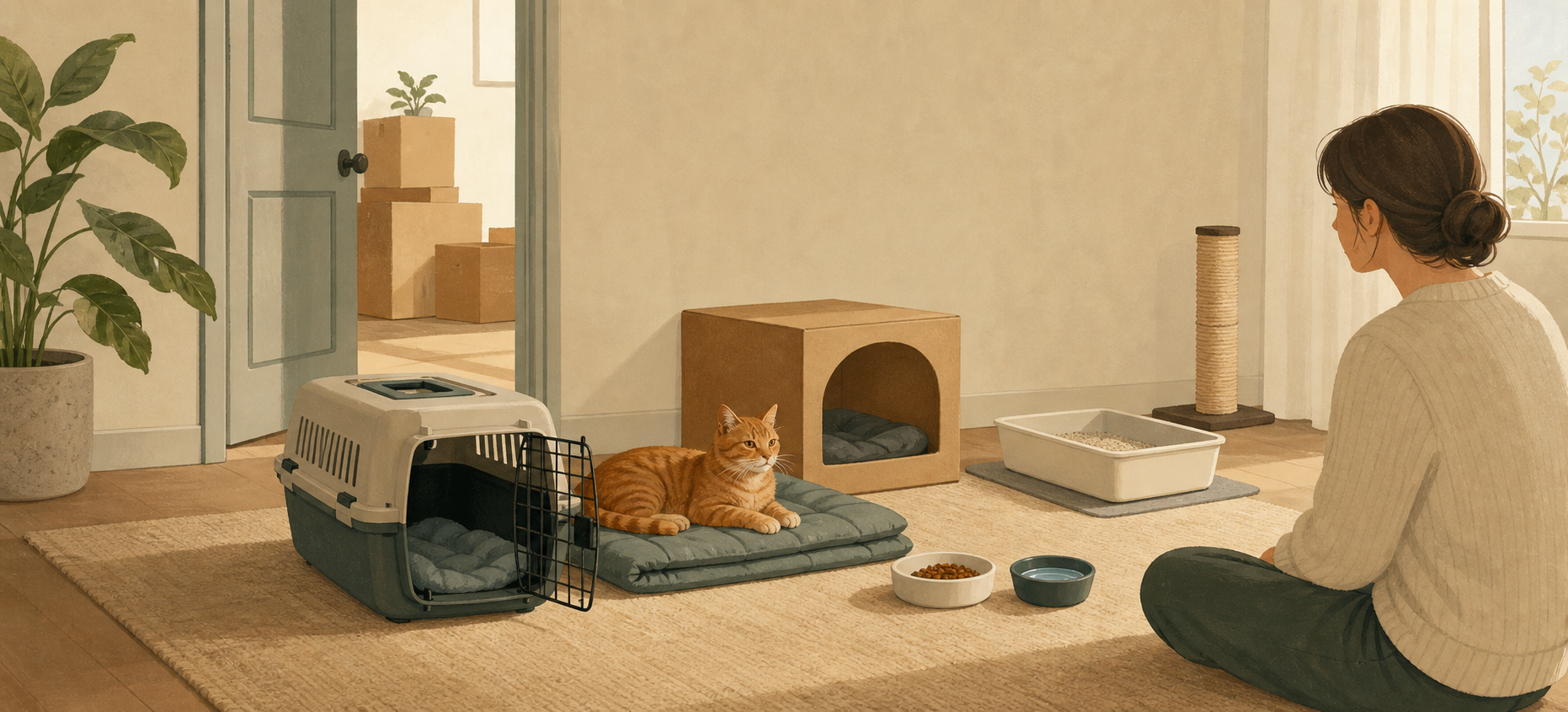
Short answer: keep the routine as familiar as you can before the move, travel with your cat securely, and begin in a prepared safe room after arrival. Keep food, water, litter, bedding, a hiding place, and the carrier familiar where possible. Open up more of the home only when your cat is coping. Hiding can happen during adjustment, but physical symptoms or a persistent change need veterinary advice—not a quick stress label.
Vet first: Contact your veterinarian for a new or persistent change in appetite, drinking, urination, defecation, mobility, grooming, breathing, or behavior. Seek urgent care for severe pain, collapse, breathing difficulty, repeated straining, little or no urine, blood, or marked weakness. Do not assume a move explains a physical symptom.
What should you do before moving day?
Prepare your cat’s first room before boxes, movers, and open doors add risk. Choose a quiet room that closes securely. Set out familiar bedding, somewhere to hide, food and water away from the litter box, a scratching surface, a few familiar toys, and a box with the usual litter. Then remove dangerous cords, strings, plants, and fragile items.
Keep the carrier accessible if possible, with familiar bedding inside. AAHA recommends making the carrier a normal, positive part of the home rather than bringing it out only for travel. AAHA: Helping your cat cope with veterinary visits
Keep meal times, play, sleep, and medication routines as steady as possible. Unless your veterinarian has advised it, this is not the moment to introduce new litter, a diffuser, food, or an elaborate device. A move is already a lot for a cat to take in. Familiar sensory cues also make it easier to see what is actually changing.
How should you prepare a safe room?
| Safe-room item | Practical setup | What to observe |
|---|---|---|
| Door and windows | Close securely; check screens, gaps, and escape routes | Is the room quiet and reliably controlled? |
| Hiding | Offer a box, covered bed, or furniture space that cannot collapse | Can the cat retreat without being pulled out? |
| Food and water | Keep them separate from the litter box and use familiar bowls if possible | Is the cat approaching them without pressure? |
| Litter box | Use the familiar box and litter; keep the route clear | Use, avoidance, edge-standing, or any discomfort |
| Carrier and bedding | Leave the carrier open with familiar smells | Does the cat choose to rest near or inside it? |
| Human contact | Sit quietly; allow the cat to choose distance | Does the cat become more settled or more withdrawn? |
Text summary: a safe room is a controlled starting zone, not a punishment room. It should contain familiar essentials, a way to hide, and enough calm for the cat to choose when to engage.
What should happen during the move?
On moving day, secure your cat in the prepared room before doors start opening. Put a clear sign on the door, tell every helper, and check the latch. If the journey is long or your cat has travel concerns, ask your veterinarian in advance about the carrier, transport, and any prescribed support. Do not use human medication or guess a dose.
Transport the cat in a secured carrier, never loose in a moving vehicle. Keep the carrier stable, avoid leaving the cat unattended in a hot or cold car, and keep the route as quiet as practical. Familiar bedding can help preserve a recognizable smell. If your cat is distressed, do not open the carrier outdoors or in an unfamiliar space.
AAHA’s preparation guidance recommends familiar carrier experiences and a calm retreat after a stressful event. AAHA: Preparing your pet for a successful veterinary visit
How long should a cat stay in the safe room after moving?
There is no universal number of hours or days. Keep your cat there until the room is secure, the basic routine is working, and your cat seems able to cope with a little more space. That may be quick for one cat and take longer for another.
Open the next area gradually, one zone at a time, with the safe room still available as a retreat. Keep familiar resources in their places and avoid forcing exploration. If you have multiple cats, do not assume the move has erased tension; provide separated resources and introduce access carefully. The 2024 AAFP intercat-tension guideline recommends a secure transition room and multiple, separated resources during integration. AAFP intercat-tension guideline
What signs after a move need a veterinarian?
Hiding by itself does not tell you whether a cat is stressed, frightened, ill, or simply choosing a quiet place. Record what changed and whether your cat is eating, drinking, using the box, moving normally, and responding in their usual ways. Contact your veterinarian for a new, persistent, or physical change.
Do not wait for “settling in” if your cat is repeatedly straining to urinate, producing little or no urine, showing blood, vomiting, collapsing, having breathing difficulty, or seeming in severe pain. The emergency box above is not exhaustive; if you are unsure, call a veterinary service and describe exactly what you see.
What did Pico’s household keep familiar?
Pico’s log: the room was the first variable
For Pico, the useful preparation was not a special product. We kept a familiar resting setup together, prepared one quiet room, and watched what changed before opening more of the home. We did not measure “stress,” and we cannot say which detail mattered most. It was simply the order that let us avoid changing everything at once.
Pico’s experience is a single household story, not veterinary advice or a guarantee for another cat.
How can you expand the home without rushing?
- Confirm the safe room is secure and the cat has access to essential resources.
- Keep the usual food, litter, bowls, bedding, and daily rhythm where possible.
- Open one additional area when your cat can retreat and is coping with the current room.
- Keep doors, windows, balconies, stairs, and other exits controlled.
- Map where litter, food, water, resting, scratching, and hiding resources sit.
- Pause expansion if your cat becomes more withdrawn, stops using resources, or shows a physical change; call your veterinarian.
For context on subtle signs, read the cat stress and anxiety pillar, the cat-first enrichment routine, and the multi-cat tension resource plan. If litter-box use changes, use the vet-first cat-peeing-everywhere guide rather than assuming the move is the cause.
CTA: Prepare the first room before moving day, write the cat’s baseline routine on the door, and keep your veterinarian’s contact details easy to find.
FAQ
Should I keep my cat in one room after moving?
Usually, a secure, prepared safe room is a sensible starting point. Keep it available while your cat adjusts, then expand access gradually when the room’s routine is workable. Individual cats vary.
How do I move a cat without making the move more stressful?
Prepare a quiet room, secure the cat before doors open, use a stable carrier with familiar bedding, and keep the carrier closed during transport. Ask your veterinarian in advance about travel concerns or prescribed support.
How long will a cat hide after moving house?
There is no universal timeline. Hiding can be an adjustment clue, but it does not diagnose stress. Monitor eating, drinking, movement, grooming, and litter-box use, and contact your veterinarian for a persistent or physical change.
Should I change my cat’s litter after moving?
Keep the familiar litter and box if possible during the move. Changing litter at the same time makes the transition harder to interpret; if a change is needed, use the gradual litter-switch method after your cat is settled and veterinary concerns have been considered.
Can a safe room make a cat feel trapped?
A safe room should be secure, quiet, resourced, and used as a retreat—not as punishment. Give the cat choice within the room, provide hiding, and expand access gradually when appropriate. Ask your veterinarian about any concerning response.
Sources and editorial note
- AAHA: How Can I Make Moving Easier for My Pet? — moving preparation and identification considerations.
- AAHA: Preparing Your Pet for a Successful Veterinary Visit — calm retreats, familiar carriers, and watching stress signals.
- AAHA: Helping Your Cat Cope With Veterinary Visits — carrier familiarity and gradual positive exposure.
- 2024 AAFP Intercat Tension Guidelines — transition rooms and separated resources for multi-cat homes.
Not veterinary advice: This article provides general educational information and describes one household’s experience. It does not diagnose, treat, or replace advice from a licensed veterinarian. If your cat’s behaviour or health changes, contact your veterinarian; seek urgent care for emergency signs. Product information is not a recommendation for every cat, and your veterinarian should advise on medicines, supplements, and medical conditions. Pico’s experience is not evidence that the same approach will work for another cat.