Cats can have household tension without loud fights. Look for staring, route changes, blocking, hiding, waiting for another cat to leave, or avoiding food and litter-box areas. Start with a veterinary check for any new behavior or toileting change, then separate and improve access to resources before attempting a slow, positive reintroduction. The 2024 AAFP intercat-tension guideline emphasizes recognizing subtle conflict and reducing competition between cats. AAFP intercat-tension guideline
Vet first: a behavior change can have a health component
Contact your veterinarian promptly for a new or persistent change in behavior, appetite, drinking, mobility, grooming, or litter-box use. Contact a veterinarian or emergency clinic now if a cat is repeatedly straining to urinate, producing little or no urine, crying out, showing blood in urine, vomiting, becoming weak or collapsed, or seems in severe pain. Do not wait for a resource rearrangement or reintroduction to work. AAHA: Why isn’t my cat using the litter box? · AAFP/ISFM house-soiling guideline
What are the quiet signs of tension between cats?
Quiet tension often shows up as a pattern: one cat has less room to move, rest, eat, or use the box comfortably. A single awkward encounter does not explain a relationship. Pain, illness, a household change, or a cramped route may all be part of the picture. Write down what happened before deciding that either cat is “the bully.”
| What you notice | What to record | Why it matters | First low-pressure response |
|---|---|---|---|
| Staring, freezing, or body blocking | Which cat blocks whom, where, duration, and escape routes | A cat may be unable to pass without confrontation | Open a second route; move neither cat toward the other |
| Litter-box blocking or guarding | Box location, time, approach, whether the other cat turns away, and any deposits outside the box | A cat may avoid a box that is technically available but socially unsafe; the AAFP guideline links social tension with fear of going to the box | Add separated, easy-access boxes and arrange a clear route away |
| Route changes | Rooms no longer visited, stairs avoided, waiting at doorways, or taking a longer path | Avoidance can reveal a pressure point before a fight is obvious | Map the route and remove the bottleneck where possible |
| Hiding, waiting, or eating later | Which resources are skipped, timing, appetite, and whether the cat can leave | Reduced access can affect daily welfare and may look like “picky” behavior | Offer separate food, water, rest, and litter locations |
| Chasing, hissing, swatting, or fighting | Trigger, intensity, injuries, whether either cat can disengage | Escalation needs safety planning; injuries need veterinary advice | Separate safely; do not punish or force a face-to-face meeting |
Plain-text summary: repeated staring, blocking, avoidance, delayed resource use, and route changes can be quiet signs of intercat tension. They are clues to record, not a home diagnosis. Any sudden behavior, appetite, mobility, or litter-box change still needs veterinary advice.
How can one cat block another from a litter box?
Blocking is not always dramatic. It can look like one cat parked in a doorway, watching the approach, trailing the other cat toward the box, or sitting by the only way out. There may be no swat at all. If the other cat turns around, waits, urinates elsewhere, or uses the box only when the first cat has gone, note the whole sequence and discuss it with your veterinarian. Social tension is one possible contributor alongside medical, access, box, and household factors. AAFP intercat-tension guideline · AAHA/AAFP environmental-needs guidance
Do not place a box in a dead-end room simply because it is quiet. A usable location should have a calm approach, more than one way out where practical, and enough separation that one cat cannot control every approach. If toileting has changed, start with My cat is peeing everywhere: a vet-first decision tree and Is it spraying or peeing? The photo-free clues to record for your vet.
How many litter boxes do multiple cats need?
One box per cat, plus one is a useful place to start planning, not a score to hit and forget. A cluster of boxes can still leave one cat with no comfortable option. Spread them through the home, keep approaches open, and avoid making a cat pass a housemate to get there. Your veterinarian may suggest a different setup for your cats’ age, mobility, health, layout, and actual use. The AAFP intercat-tension guideline focuses on separated resources and less competition, rather than a magic number. AAFP intercat-tension guideline
| Resource | A better question than “do we have enough?” | Practical layout test | Avoid |
|---|---|---|---|
| Litter boxes | Can each cat reach and leave one without being watched or cornered? | Put boxes in separate areas, not one row in a single room; check doorways and stairs | One controlled corridor, covered dead end, or all boxes side-by-side |
| Food and water | Can cats eat and drink without competing or staring? | Use separate stations with visual distance; observe whether a cat waits or leaves | One bowl for everyone when access is contested |
| Resting and hiding | Can a cat retreat and remain undisturbed? | Offer more than one hide and resting height, with escape options | A single favored bed or hide that another cat can guard |
| Scratching and play | Can both cats use outlets without sharing a bottleneck? | Spread stable scratchers and play areas through the home | Putting every activity in the busiest room |
Plain-text summary: quantity helps, but distribution, approach, exit routes, and visual separation determine whether a resource is usable. Spread litter boxes and other essentials through the home so one cat cannot control a single doorway or room.
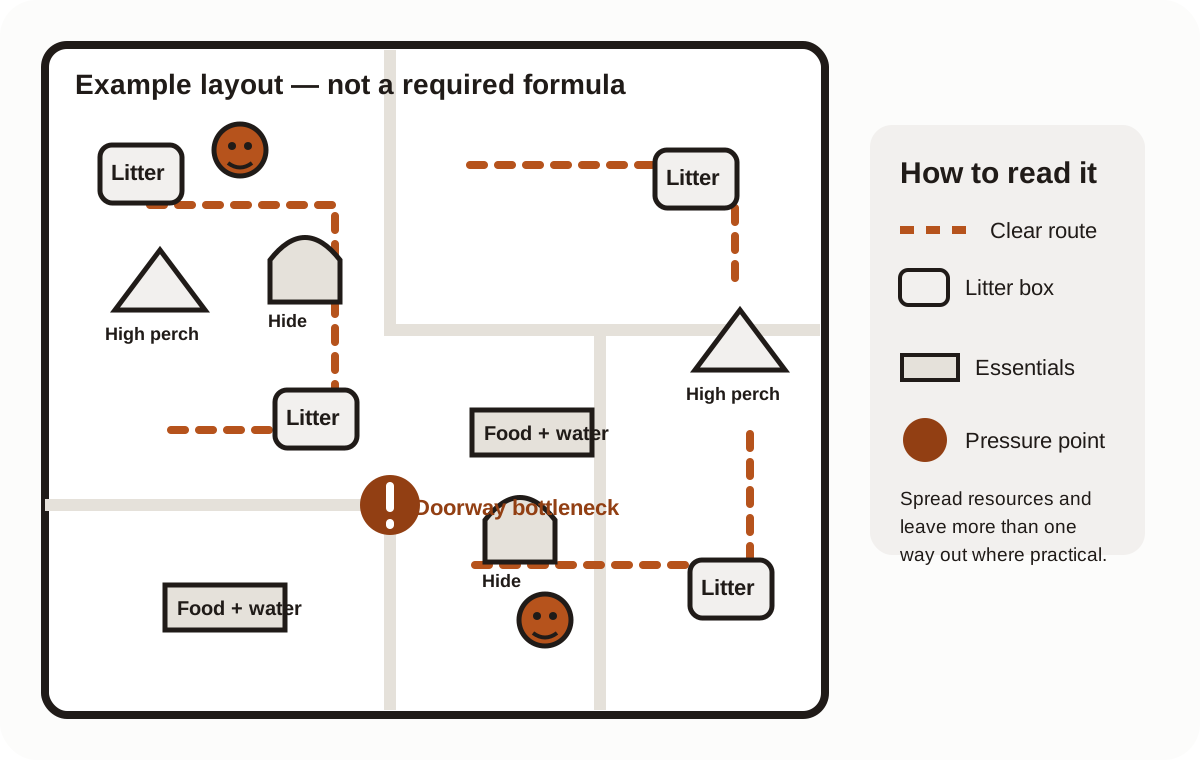
What should I change today if my cats seem tense?
Make the home easier to move through before asking the cats to spend more time together. Pick one or two access problems, change those, and then watch what happens.
- Check health and injuries. Arrange veterinary advice for new behavior, reduced eating, pain signs, wounds, or litter-box changes.
- Separate if needed. Use doors or secure barriers so each cat can eat, drink, rest, and use a box without being followed. Separation is a safety step, not a punishment.
- Distribute essentials. Add or relocate resources away from bottlenecks. Keep familiar litter and cleaning routines stable unless a veterinarian advises otherwise.
- Protect exits and height. A cat should have a way to move away, hide, or climb without being trapped by the other cat.
- Record the pattern. Note time, location, people, outside-cat activity, resource use, and what happened immediately before the interaction.
- Avoid punishment and forced proximity. Yelling, chasing, spraying water, or holding cats together can add fear and make the next interaction harder to interpret. AAHA/AAFP guidance
What is a safe reintroduction path?
Reintroduction is a careful reset for cats who cannot comfortably share space right now. It is not a race, and there is no single schedule that fits every pair. If there have been injuries, repeated attacks, severe avoidance, or a sudden relationship change, ask your veterinarian about a qualified feline behavior professional before you begin.
1. Begin with calm separation
Give each cat a complete, comfortable area: food, water, litter, a place to hide and rest, a scratcher, and an option for play. Wait until both cats are back to ordinary eating, toileting, and resting before moving on. Do not take away essentials to make a cat approach the other.
2. Exchange familiar scents without forcing contact
Once both cats are settled, swap bedding or use separate cloths to carry familiar household scent from one area to the other. Set the item down; let each cat decide whether to inspect it. Persistent avoidance or agitation is a reason to stop.
3. Pair the other cat’s presence with something easy
Offer food or calm play on opposite sides of a closed door, with enough distance for both cats to stay relaxed. Keep it brief. The aim is not to make either cat eat or play on cue. It is to let each cat have a predictable moment and an easy way to step away.
4. Add a visual barrier, then brief visual access
Use a secure screen, gate, or partly opened door only after both cats are comfortable at the previous step. Increase access in small increments. Staring, freezing, crouching, growling, repeated hissing, tail lashing, rushing, or refusing food means this step is too hard. Close the visual access and return to the last calm stage.
5. Try short shared time with escape routes
Only progress when both cats can disengage. Keep resources and high/hidden options available, supervise closely, and end the session while it is still calm. Do not carry cats toward each other or block either cat’s exit.
6. Increase time slowly and keep separate options
Progress can be uneven. A shared room does not mean the cats must share food bowls, beds, litter boxes, or human attention. Keep separate resources and pause or step back if tension returns.
The 2024 guideline describes prevention and management around the cats’ environment and relationship; it does not make a universal promise about how quickly cats will coexist. AAFP intercat-tension guideline
Should I use a multi-cat pheromone diffuser?
A pheromone product may be one optional environmental support to discuss with your veterinarian, but it cannot replace health assessment, separated resources, safe routes, or a reintroduction plan. Choose by the product label and intended use; do not treat a diffuser as proof that the problem is behavioral or as a guarantee of harmony. See Cat pheromone diffusers: what they can support and what they cannot replace for a separate comparison.
Pico’s log: the conflict we missed because no one was fighting
Pico’s house-soiling journey made us pay attention to the unglamorous details: the route to the litter box, access to it, and what had changed around an accident. We were working through litter-box setup, litter, pheromone context, and routine changes—not a neat before-and-after story. We did not have a complete multi-cat incident timeline, a confirmed blocking cat, or a confirmed cause in the source record. Those are gaps, so we will not fill them in.
What stayed useful in our home was a small, repeatable practice: map the route to the resource, change one variable, then record only what we saw. It helped us slow down instead of making a story from one moment. That approach connects with Pico’s seven-day litter-box reset and the broader Is my cat stressed? guide.
Pico’s experience is a single household story, not veterinary advice or a guarantee for another cat.
What should you do next?
Start with one observed interaction. Sketch the route to the nearest litter box, food station, and retreat. Contact your veterinarian for any new or persistent behavior or toileting change. If access is contested, separate the cats safely, spread out the essentials, and use only calm, reversible next steps.
Frequently asked questions
Can cats have tension if they never fight?
Yes. Staring, blocking, avoidance, route changes, waiting to use resources, and one cat leaving when another enters can be quieter signs. These are clues to record, not proof of a behavioral cause; new changes still need veterinary advice.
How do I know if one cat is blocking the litter box?
Observe from a distance for repeated patterns: sitting in the approach, watching the box, controlling the exit, following the other cat, or causing the other cat to turn away. Do not provoke a confrontation. Add separated boxes and discuss any change in toileting with your veterinarian.
Do I need one litter box per cat plus one?
That is a useful planning starting point, not a universal rule. Distribution, access, exits, cleanliness, box design, health, and the home layout matter too. A veterinarian can help tailor the plan if a cat is avoiding a box.
Should I let cats “fight it out”?
No. Do not force contact or punish either cat. Separate safely when needed, protect access to essentials, and seek veterinary or qualified behavior guidance for repeated aggression, injuries, or severe avoidance.
How long should a cat reintroduction take?
There is no reliable universal timetable. Move forward only when both cats remain calm at the current step, and step back when tension returns. A veterinarian or qualified feline behavior professional can help set a safer plan for difficult cases.
Related Catpip guides
- My cat is peeing everywhere: a vet-first decision tree
- Pico’s seven-day litter-box reset
- Covered vs open litter boxes
- Is it spraying or peeing?
- Cat peeing on the bed
- Cat pheromone diffusers
- How to choose cat litter for a sensitive or anxious cat
- Is my cat stressed?
Sources and publication note
- 2024 AAFP intercat tension guidelines: recognition, prevention and management — quiet signs, resource access, litter-box fear, prevention, and management principles.
- AAFP/ISFM Guidelines for Diagnosing and Solving House-Soiling Behavior in Cats — veterinary history/examination/testing and overlapping contributors.
- AAHA: Why isn’t my cat using the litter box? — vet-first and urgent-care boundary.
- AAHA/AAFP Feline Life Stage Guidelines: behavior and environmental needs — separated resources, environmental context, and no-punishment guidance.
Not veterinary advice: This article provides general educational information and describes one household’s experience. It does not diagnose, treat, or replace advice from a licensed veterinarian. If your cat’s behaviour or health changes, contact your veterinarian; seek urgent care for emergency signs. Product information is not a recommendation for every cat, and your veterinarian should advise on medicines, supplements, and medical conditions. Pico’s experience is not evidence that the same approach will work for another cat.
Next step: Use the multi-cat tension pillar to sketch each cat’s routes, then bring your observations to your veterinarian before making a major household change.